
New Transmission Line Construction Project

Project Overview

The Walesboro Reliability Improvements Project includes a new 345kV to 69kV transmission substation, constructing 10.3 miles of new electric transmission lines, and rebuilding 2 miles of 69kV electric transmission lines in Bartholomew County.

The project is a major investment in electric infrastructure that will strengthen reliability and prepare the system for future growth in the area. It includes construction of two new transmission lines and a new electric substation, which will be located on Hoosier Energy-owned property in Waynesville, Indiana.

These upgrades are part of our continued commitment to delivering safe, reliable and affordable electricity to more than 10,000 members served by Bartholomew County REMC.
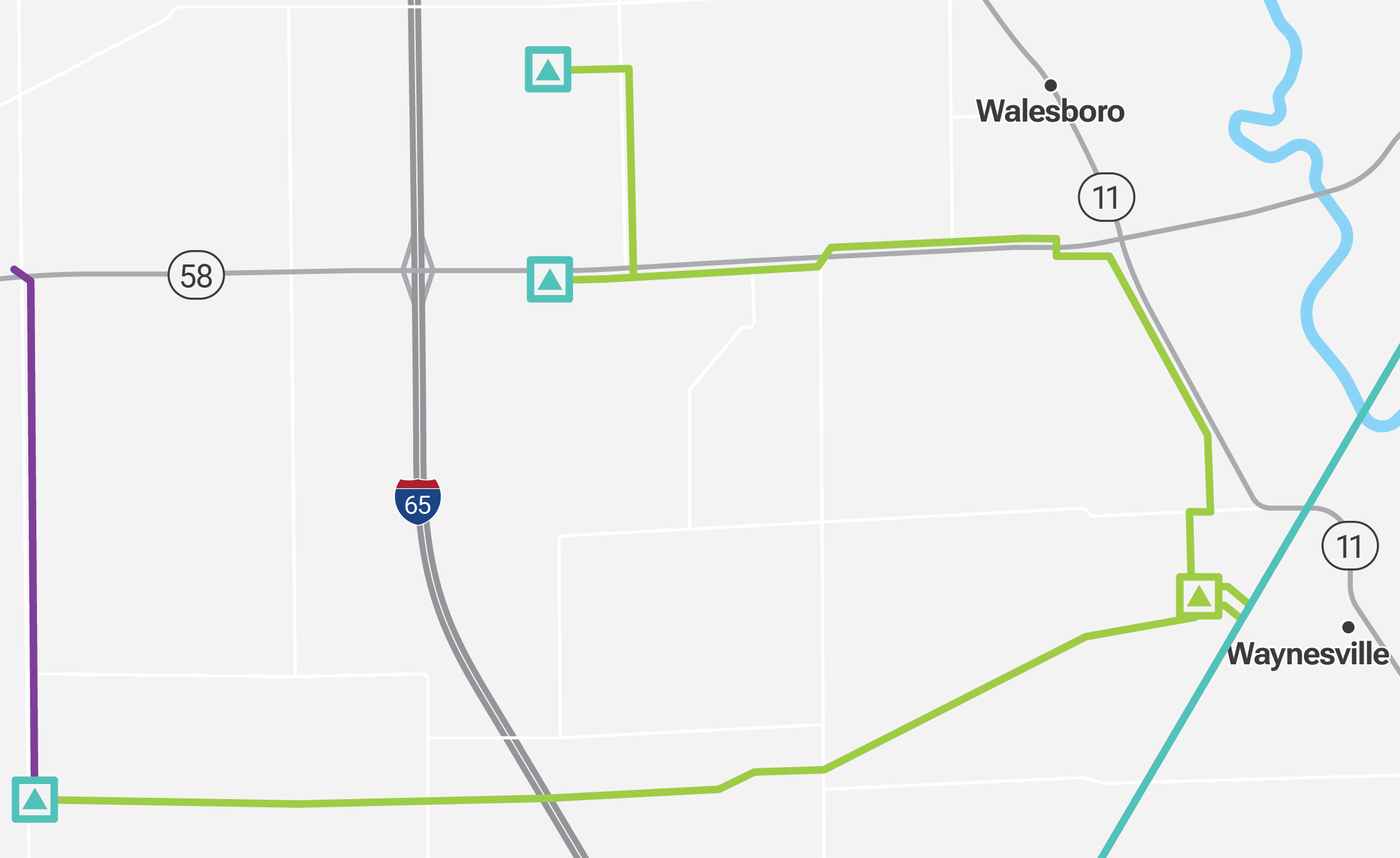
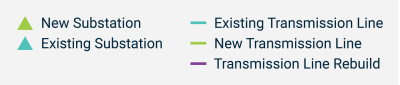
25-0542-WaynesvilleRouteMap_2-02

Timeline

Pre-construction Activities (survey, real estate, design, permitting, materials): 2025-2027

Vegetation Activities & Access: 2026-2027

Construction (foundations, line construction): 2027-2029

Restoration: Ongoing throughout construction – 2029

Project Routing Analysis

An area was defined for the study of prospective solutions for the project by adding a new substation in Waynesville area and connecting it to the DEI Walesboro and Hoosier Ogilville and Woodside substations. As many as six potential routes were evaluated and studied for each line section.

The routes were studied for constraints and opportunities based on environmental, social, and engineering factors using available data and aerial photography. The collected data was input into a weighted scoring matrix to determine the most appropriate route for each of the new lines independently, shown in the map above.

Project Design

The new 69-kilovolt (kV) lines will be supported by steel poles. Final design will determine height, but the structures will typically range from 60 to 100 feet above ground.

Hoosier Energy Overview

Founded in 1949, Hoosier Energy is a generation and transmission cooperative (G&T) with headquarters in Bloomington, Indiana.

The G&T provides electric power and services to 17 member distribution cooperatives in central and southern Indiana and southeastern Illinois. We are a community-focused organization that works to efficiently deliver affordable, reliable and safe energy.

Bartholomew County REMC Overview

Bartholomew County Rural Electric Membership Corporation is an electric cooperative located in Columbus, Indiana. Founded in 1937, this REMC was formed to serve mostly the rural areas of Bartholomew County. The first lines served 121 homes in German and Flatrock townships. Today, Bartholomew County REMC serves customers in all townships of Bartholomew County and some of the areas in the adjoining counties. With a broad base of residential, commercial, and industrial customers, Bartholomew County REMC is very competitive in service and rates. BCREMC is a member-owned utility.

Frequently Asked Questions

Electricity is part of our everyday lives and a product we rely on with an expectation of uninterrupted service. This project is a major investment in electric infrastructure that will strengthen reliability and prepare the system for future growth in Bartholomew County.

These upgrades are part of our continued commitment to delivering safe, reliable and affordable electricity to more than 10,000 members served by Bartholomew County REMC.

An area for the study of prospective solutions was defined, and multiple potential routes were identified.

The routes were studied for constraints and opportunities based on environmental, social, and engineering factors using available data and aerial photography. The collected data was input into a weighted scoring matrix to determine the most appropriate route for each of the new lines independently, shown in the map above.

Preconstruction activities will take place beginning in 2025, including surveying, real estate, engineering, permitting and ordering materials. We project construction will begin in 2026 and continue into 2029. This includes new substation site improvements and additions, vegetation management, constructing access to the lines, foundation and line construction, and restoration.

Hoosier Energy employees and approved contractors and consultants will be on-site. They will be easily identifiable by their logos and materials. You will be contacted if your property is part of the project.

Possibly. Hoosier Energy makes every effort to notify landowners whether surveying activities will take place on their property, and surveyors acting on behalf of Hoosier Energy will have contact information regarding the proper representative of Hoosier Energy to contact if there are questions. Under the provisions of the Indiana Code, surveyors are legally permitted to enter upon most private property for the specific purposes of performing surveying activities. Hoosier Energy, or its representatives, will make every effort to contact landowners prior to any surveying activities, and all surveyors will have proper identification. Surveyors may not interfere with any construction, operation, or maintenance activity being conducted upon the property, and Hoosier Energy will be responsible for any damage that may result from surveying activities, however unlikely that may be. See Indiana Code sections 25-21.5-9-7 and 25-21.5-9-8 for the specific regulations and requirements regarding these activities.

Hoosier Energy Real Estate specialists, employees or their consultants and contractors, will be reaching out to landowners should an easement be necessary on your property.

An easement is a legal agreement that gives utilities the right to use (not own) specific portions of land for certain purposes. Easements are recorded on the property deed and remain in effect after properties are sold or transferred to a new owner.

Easement area widths for this project are expected to be 100 feet, however roadside areas could be less.

Hoosier Energy will need to trim or remove trees and vegetation to prevent contact or interference with line operations. This will allow access for ongoing maintenance and outage restoration as well as provide a visual opening for regular aerial patrols. Vegetation specialists will be reaching out to landowners as needed.

The new support structures will be constructed of steel and will be multiple or single poles. Height of the poles will be determined with final design, but they are typically 60 to 100 feet above ground. Final design will also determine if concrete foundations are needed, particularly at sharp turns near roadways and obstructions and highway crossings. Steel poles are more reliable than their wood counterparts and typically require less maintenance.

Electromagnetic fields (EMF) with transmission lines are low frequency and have not been found to be linked to adverse health conditions.

Although environmental factors were thoroughly considered during the routing analysis, Hoosier Energy will continue to survey and investigate during various stages of the project to minimize impacts, comply with regulations, and protect the environment throughout construction and long-term operations and maintenance. Hoosier Energy will ensure any disturbance is minimized, stabilized and restored throughout the construction process.

Typical work hours will be during daylight but will also be weather dependent. Foundations and stringing conductor may require additional hours. Crews will access the structures multiple times throughout construction.

Hoosier Energy and their contractors will work with property owners to ensure safe access to their property. Hoosier Energy construction representatives will be available to discuss. Traffic control companies will be utilized as needed for safe roadway access.

Hoosier Energy performs environmental surveys and assessments in coordination with U.S. Fish and Wildlife Service to minimize project impacts and comply with environmental regulations. This includes state and federal protected or endangered species as well as the associated habitat.

Tree clearing for the project will take place during the inactive bat season of October 1 to March 31 in compliance with federal regulations.

Have Additional Questions?