



L'Indiana Economic Development Association (IEDA) est depuis longtemps associée à Hoosier Energy, qui figurait parmi le groupe de services publics, de banques, de cabinets d'avocats, de comptables et d'autres piliers de la communauté qui ont aidé à créer l'organisation.
En 2025, Jeremy Sowders, responsable du développement économique, a présidé le conseil d'administration de l'IEDA, aidant ainsi le groupe à traverser une année de transition.
Il s'est récemment entretenu avec nous au sujet de l'IEDA et de son année à sa tête.
Q : Qu’est-ce que l’Indiana Economic Development Association, et depuis combien de temps y êtes-vous impliqué ?
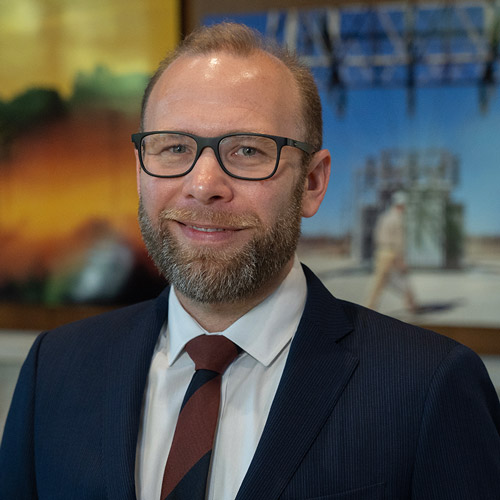
Jérémy Sowders
UN: L'IEDA est une association regroupant des professionnels du développement économique de l'Indiana. Elle réunit des responsables du développement économique aux niveaux local, départemental et étatique, ainsi que des prestataires de services, des entreprises de services publics et d'autres acteurs œuvrant pour la croissance des collectivités et le renforcement des opportunités d'emploi. C'est une association à vocation générale, où de nombreux groupes jouent un rôle.
Dès mon premier jour au Département du Commerce de l'Indiana en 2003, je me suis impliqué dans une aventure qui reste l'une de mes anecdotes préférées. Mon chef m'avait demandé d'assister à un événement. À l'époque, un gel des embauches venait d'être instauré et mon avenir professionnel était incertain. Il m'a dit : « Je sais que c'est ton premier jour, mais je tiens à ce que tu participes à cet événement et que tu rencontres tes futurs collègues venus de tout l'État. » J'étais donc au bureau pendant quelques heures, puis j'ai traversé la rue pour me rendre à la conférence annuelle de l'IEDA, qui réunissait plus de 100 développeurs économiques représentant des collectivités de tout l'Indiana.
En me promenant et en discutant avec les gens, j'ai vraiment compris ce qui comptait pour eux, ce qui se passait dans leurs quartiers et comment ils collaboraient avec les élus et autres responsables civiques et économiques. C'était à la fois agréable et stimulant. Aujourd'hui, plus de vingt ans après, je travaille et échange quotidiennement avec des amis et collègues rencontrés ce jour-là.
Q : Qu'y a-t-il de si important dans ce que fait l'IEDA ?
UN: Une organisation comme l'IEDA est plus importante que jamais. À mes débuts dans ce métier, on parlait souvent de « chasse aux usines ». À l'époque, le développement économique consistait principalement à attirer les grands investissements industriels. L'objectif était de convaincre une grande usine de s'installer dans sa ville pour créer des emplois. Ces investissements renforçaient les communautés, élargissaient l'assiette fiscale et profitaient à tous. Ces 20 dernières années, la situation a évolué et l'on attend désormais des professionnels du développement économique qu'ils fassent bien plus : du développement de la main-d'œuvre et de l'attraction des talents à la revitalisation des centres-villes, tout en continuant à recruter et à fidéliser les grands employeurs.
Q : Alors, comment Hoosier Energy interagit-elle avec IEDA ?
UN: Hoosier Energy a été parmi les premiers membres de l'IEDA. Des prestataires de services — notamment des entreprises de services publics, des compagnies ferroviaires, des banques et des cabinets d'avocats — se sont joints aux premiers professionnels du développement économique et aux élus pour contribuer à légitimer la profession et à élargir le nombre de praticiens dans tout l'État.
Cette collaboration a contribué à la création d'IEDA. IEDA repose sur l'idée que lorsqu'une nouvelle entreprise construit une installation dans une communauté, elle crée des emplois et augmente la demande de services tels que les services publics, les banques et d'autres partenaires locaux.
Je tiens également à saluer le travail d'Harold Gutzwiller, responsable du développement économique chez Hoosier Energy et fervent défenseur de l'IEDA et de la profession. Au sein du département – Harold, Jeff Pipkin et moi-même – avons tous débuté notre carrière dans des organismes de développement économique locaux, régionaux ou étatiques, au service des collectivités, avant de rejoindre Hoosier Energy. Aujourd'hui, nous soutenons nos membres et leurs communautés.
Q : Quelle était votre tâche en tant que président ?
UN: Mon mandat de présidente a été axé sur la renaissance et la mise en place d'un plan de pérennité à long terme, tout en apportant valeur ajoutée et soutien à nos membres. L'an dernier, nous avons consacré une grande partie de notre temps et de notre énergie à réinventer l'IEDA.
Nous avons analysé l'évolution d'IEDA au cours des 20 ou 30 dernières années et conservé les éléments qui fonctionnaient. Nous avons identifié ces points forts tout en orientant IEDA vers une nouvelle direction et en la positionnant pour la croissance. Cela impliquait une nouvelle communication, une nouvelle image de marque et une approche renouvelée à tous les niveaux de l'organisation.
À la fin de l'année dernière, nous nous sommes réunis et avons décidé de ne pas nous contenter de ressasser le passé. Nous nous sommes engagés à évaluer la situation actuelle de l'IEDA, ses possibilités et ses objectifs, et à concentrer nos efforts sur ces aspects.
Cela nous a amenés à ce que nous faisons aujourd'hui : organiser des séances d'écoute avec nos membres, une dans chaque coin de l'État.
Q : Comment avez-vous vécu votre année en tant que président ?
UN: Tout d'abord, ce fut un honneur de représenter Hoosier Energy et ses membres au niveau de l'État. Lors de mes prises de parole publiques, je représentais Hoosier Energy et j'avais l'occasion d'expliquer qui nous sommes, ce que nous faisons et comment nous soutenons les communautés de l'Indiana.
Dans l'ensemble, ce fut une expérience extrêmement enrichissante. J'ai énormément appris sur le plan professionnel. Ce fut un honneur de pouvoir rendre la pareille à l'association qui m'a initiée à ce métier. Lorsque j'ai assisté à ma première réunion de l'IEDA, je connaissais très peu le secteur du développement économique, mais les échanges et les contacts que j'y ai noués ont posé les fondements des connaissances et de la vision sur lesquelles je m'appuie aujourd'hui.
Je garderai toujours un souvenir précieux de cette opportunité, et je suis convaincu que notre travail a contribué à renforcer l'IEDA et à la rapprocher de sa devise : « Un État, plusieurs voix ». Ce fut une année de transition, certes, mais une année qui a permis de réaliser des progrès significatifs et qui a préparé l'IEDA à un avenir encore plus prometteur.